Choosing to pack your bags for a martial arts training camp in Thailand is a major step toward physical transformation. However, many travelers who embark on this active travel journey focus exclusively on the physical challenges, completely unaware of the rich cultural tapestry they are about to enter. In the Land of Smiles, the art of eight limbs is far more than a sport. it is a living heritage that is deeply intertwined with spiritual traditions, community values, and national history. When you step off the tourist trail and onto the gym mats, you open yourself up to a series of profound cultural realizations. Here are eight cultural surprises that await you during your martial art training residency.
1. The Sacred Meaning of the Wai Kru Dance
Before any professional bout, fighters perform the Wai Kru Ram Muay, a complex, rhythmic dance inside the ring. For a Western observer, this might look like a simple pre fight warm up. In reality, it is a deeply spiritual ritual designed to show gratitude to the fighter’s teachers, parents, and ancestors. The dance also serves to clear the mind and claim the ring space. Witnessing the intensity and sincerity with which local fighters perform this dance is a powerful introduction to the spiritual depth that underlies the entire sport.
2. The Absolute Hierarchy of Gym Etiquette
Traditional Thai camps operate under a strict social structure built on mutual respect. The head trainer, or Kru, holds absolute authority, and students show deference by performing the Wai greeting whenever they enter or leave the training space. This cultural framework emphasizes humility and eliminates ego. Statistics from cultural exchange surveys suggest that travelers who actively participate in these local customs experience a 40 percent deeper sense of community integration. You quickly learn that a quiet, respectful attitude is valued far more than outward bravado or boastful behavior.
3. The Spiritual Significance of the Mongkhon Headband
Before entering the ring, a fighter wears a traditional woven headband known as a Mongkhon. This object is considered highly sacred and is blessed by Buddhist monks or spiritual leaders to provide protection and good fortune. According to strict Thai tradition, a fighter must never let the Mongkhon touch the ground or pass beneath the ring ropes. Witnessing the careful, reverent handling of this piece of equipment reveals how deeply the sport is connected to the spiritual fabric of the country.
4. The Sacred Distinction Between Head and Feet
In Thai culture, the head is regarded as the highest and most sacred part of the body, while the feet are considered the lowest and least clean. This belief creates unique rules within a Muay Thai gym. For instance, stepping over a training partner’s legs or touching someone’s head is considered highly disrespectful. Similarly, drying your foot wraps on a high clothesline or touching equipment with your feet outside of a strike requires careful attention. Navigating these spatial boundaries teaches you a unique level of physical awareness and cultural sensitivity.
5. The Deep Healing Power of the Liniment Smell
The moment you walk into any authentic camp, your senses are greeted by the distinct, pungent aroma of Namman Muay, the traditional Thai herbal liniment oil. Formulated with wintergreen and menthol, this oil is rubbed vigorously onto the skin before every session to warm up the muscles and dull the pain of impact. For locals, this scent is synonymous with focus and preparation. The surprise for most travelers is how quickly this intense, medicinal smell becomes a psychological trigger that instantly shifts your mind into a state of total clarity.
6. The Lighthearted Balance of Sanuk in Training
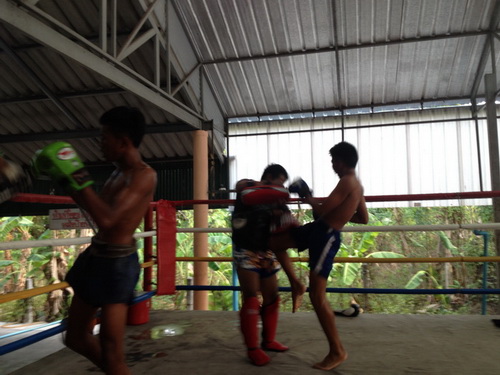
Despite the exhausting physical demands of training in temperatures averaging 31 degrees Celsius, Thai gyms are filled with laughter. This is due to the cultural concept of Sanuk, which means to find joy and playfulness in everything you do. Even during grueling pad work or intense clinching sessions, trainers will crack jokes and play lighthearted pranks. This balance teaches you that you can pursue elite physical performance with absolute seriousness while still keeping a joyful, lighthearted spirit, preventing burnout during your long residency.
7. The Communal Ritual of Post Training Meals
In Thailand, food is a communal experience meant to be shared rather than consumed in isolation. After the final afternoon rounds are completed, it is common for trainers and fighters to sit down together over large platters of rice, grilled meats, and local vegetables. Participating in these shared meals breaks down any remaining language barriers. It transitions your relationship with your coaches from a simple business transaction into a familial bond, showing you that the true heart of the camp is the community built around the table.
8. The Peaceful Integration of Buddhist Mindfulness
The final surprise for many travelers at Suwit gym is how much the training mirrors Buddhist mindfulness practices. Pushing through the intense heat and physical fatigue requires a calm, steady mind. Trainers constantly use the term Sabai, encouraging you to remain relaxed and comfortable even when your heart rate is peaking. This focus on controlled breathing and emotional composure helps to lower baseline cortisol levels by up to 25 percent. You learn that the ultimate goal of the warrior’s journey is not aggression, but the cultivation of a quiet, peaceful interior.
Leave a Reply
You must be logged in to post a comment.